Reduce repeat passes
Match scrub pressure, solution flow, and pad selection to the soil level so crews do not run the same area again to correct streaking or residue.
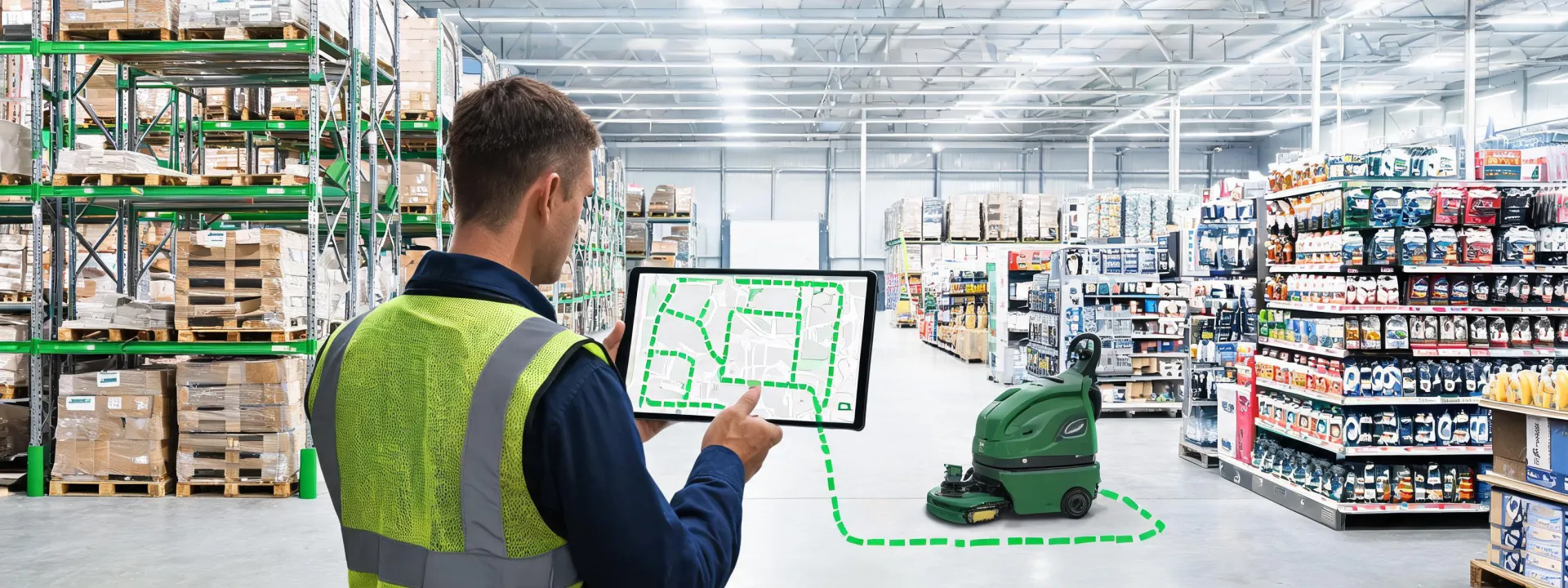
Every floor-care decision should help crews clean the right area, with the right machine, in the right number of passes. Tennant application planning turns that principle into route reviews, category guidance, and practical operating targets.
Match scrub pressure, solution flow, and pad selection to the soil level so crews do not run the same area again to correct streaking or residue.
Plan squeegee, brush, filter, and hose care around real operating hours, storage practices, and surface conditions instead of emergency replacement.
Specify machines with controls, sightlines, and service routines that a rotating facility team can repeat without complicated supervision.
Application reviews turn vague goals into observable readiness markers. These markers help teams decide whether a route is ready for a new scrubber, a sweeper, a vacuum, or a service adjustment. Concrete targets anchor the review: scrub path matched to aisle width (commonly 17 to 45 inches), solution tank sized to the cleaned area (6 to 60 gallons), and battery runtime confirmed against the longest unbroken shift on the route.
Efficiency targets only hold up when the underlying equipment choice is honest about its costs. These are the recurring tensions an application review has to settle before a route is locked.
Lower solution flow cuts water use and refill stops, yet floors with heavy grease or food residue can need a wetter pass or a second cycle. The efficient setting is the one that finishes the soil in one pass, not the lowest number on the dial.
A wide ride-on machine clears more square footage per hour, but it also demands more turning room and more training. On floors with rotating or part-time crews, a simpler walk-behind unit often delivers more consistent real-world output.
Larger lithium or lead-acid packs extend a shift, yet they raise machine weight, purchase price, and charging infrastructure. Many sites are better served by matching battery capacity to the actual cleaned area than by buying the longest run available.
Segment-specific dispute data was not available, so these considerations are presented as conservative selection trade-offs rather than ranked positions.
Floor scrubbers are built for hard, sealed surfaces. Carpet, deep-textured pavers, and unsealed concrete fall outside the squeegee recovery model and call for different methods.
If a route exceeds the runtime a single charge supports, the answer is a second battery or a split route, not pushing one machine past its working envelope.
In food and clinical zones, validated sanitation procedures take priority over throughput. Application targets adjust to the protocol rather than the protocol bending to the machine.
Bring your floor plan, shift schedule, and cleaning pain points. We will help identify where scrubbers, sweepers, vacuums, and service planning can remove wasted effort.
Request Application Review