Route assessment
Technicians review floor finishes, debris sources, water access, turning radius, and charging locations before service intervals are set.

Tennant support begins before a machine is placed on the route. Facility managers need a service plan that covers operator habits, replacement parts, charger discipline, recovery tank cleaning, and the practical reality of shared machines moving between shifts. The program below is built for warehouses, retail stores, food production corridors, schools, and manufacturing plants where missed cleaning windows quickly become safety and presentation problems.
Plan service coverage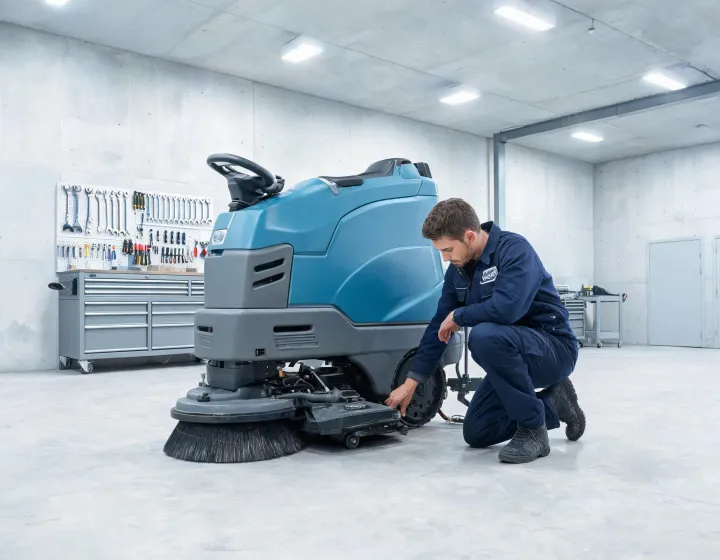
A clear note on scope: these programs cover scrubbers, sweepers, and industrial vacuums on hard, sealed floors. They do not extend to flooded recovery, coarse construction debris removal, or carpet care, where a different method belongs before any machine route begins.
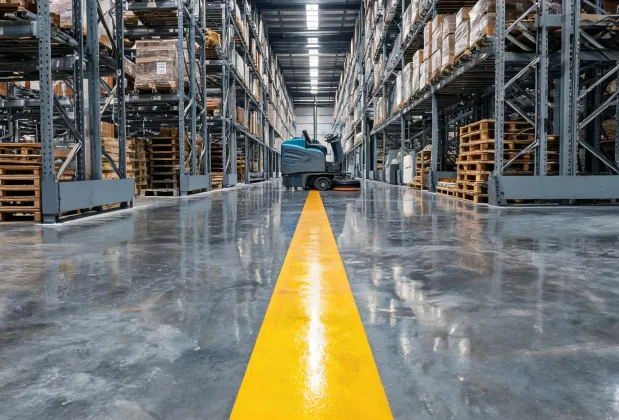
A distribution route usually fails when it ignores traffic timing. Service planning for logistics floors focuses on scrub path width, recovery performance near dock edges, battery capacity for staggered shifts, and quick visual checks that supervisors can complete before the next wave of pallets arrives.
When equipment is matched to those realities, teams spend less time repositioning machines and more time completing predictable passes across high-value traffic lanes.
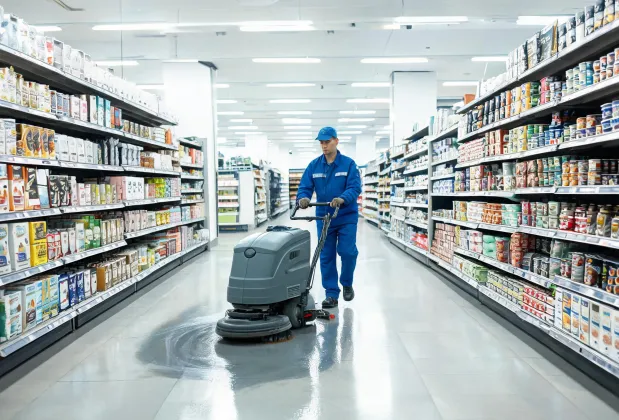
Retail crews need simple controls, quiet operation, and a recovery system that leaves floors ready for customers. Tennant service guidance emphasizes pad selection, squeegee inspection, tank hygiene, and storage routines that are easy for rotating staff to repeat.
The result is a floor-care routine that supports brand presentation while reducing callbacks, slip concerns, and machine misuse.
How you resource maintenance changes total cost and uptime risk. Both setups work; the right one depends on fleet size and how much downtime your floor can absorb.
Planned preventive service, often on a quarterly cycle, catches worn squeegees, brushes, and battery decline before they stop a route, at a predictable recurring cost. Run-to-failure defers spend but trades it for unplanned downtime that lands at the worst moment. Higher-utilization machines almost always favor a schedule; a lightly used backup unit may not.
An in-house team responds instantly and builds machine familiarity, but it carries parts stock, training, and tooling. A bundled service plan removes that overhead and standardizes records, at the cost of some response latency. Large single-site fleets often justify in-house; multi-site or lean operations lean to a plan.
Segment dispute data was unavailable, so these are framed as conservative selection trade-offs rather than ranked recommendations.
Tell us how often each area is cleaned, what machines are shared, and where downtime hurts most. We will help identify service intervals, operator checks, and category priorities that fit your team.