
Tennant S30 vs. Floor Scrubbers: Which One Should Your Budget Actually Buy?
If you've got tennant s30 for sale and floor scrubber spin speed in the same search history, you're not comparing two versions of the same machine. You're looking at two different cleaning categories. I made that exact mistake a few years ago, and it cost me a week of downtime.
I handle equipment procurement for a regional facilities company. Over the last eight years, I've tracked roughly $1.4 million in floor care spending, negotiated with dealers, and watched what machines actually cost after the novelty wore off. So let's clear up the confusion before your budget takes the hit.
What a Tennant S30 Is (And Isn't)
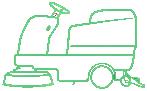
A Tennant S30 is a rider sweeper. It's a broom sweeper machine designed to pick up dry debris: dust, sand, cardboard scraps, metal shavings, packing material. It doesn't scrub. It doesn't use water. It's the heavily upgraded version of a broom.
A Tennant floor scrubber is a different tool. Search for tennant floor scrubbers and you'll see names like T300, T17, and T7. These use spinning brushes or pads, water, cleaning chemistry, and a squeegee system to pull dirt and water off the floor. They're basically a mop and bucket on steroids, but with more parts to maintain.
That distinction matters. Many buyers think they can just pick whichever Tennant is on sale. But deciding between an S30 sweeper and a floor scrubber is like deciding between a broom and a mop. They both clean. They don't do each other's jobs.
The Comparison Framework I Use
When I put equipment options side by side, I don't start with price. I start with four columns: debris type, floor surface, labor hours, and five-year total cost. If a machine can't handle the main problem in your building, the price is irrelevant.
What I mean is that specs like cleaning path and battery runtime don't matter much if the machine is wrong for the mess in front of it. A sweeper can run for hours and still leave an oily stain. A scrubber can scrub until the battery dies and still choke on loose cardboard.
Dimension 1: Dry Debris vs. Wet Mess
A Tennant S30 wins when your floor is mostly dry. Think warehouses, loading docks, metal fabrication shops, parking garages, and packaging lines. The brushes throw debris into the hopper, and the dust filter keeps the air from looking like a desert storm.
A floor scrubber wins when the floor has sticky residue, oil, tire marks, food drips, or anything that makes a dry sweeper just smear the problem around. Scrubbers are also the right choice if your facility needs visibly clean floors for safety or inspection reasons.
This is especially true in Mobile, AL. Gulf Coast humidity and tracked-in sand can be brutal on floor finishes. Sand is abrasive. If you push it around with a wet scrubber, it works like sandpaper on the brush and leaves a film. So when someone searches for floor sweeper and scrubber Mobile AL, they're usually looking for a solution to that exact problem.
And this isn't just cosmetic. OSHA's walking-working surfaces standard, 29 CFR 1910.22, says floors must be kept clean and dry. That compliance angle is part of the cost conversation. In short: dry debris goes to the S30. Wet or sticky mess goes to the scrubber. If both exist, the sweeper should probably come first in the workflow.
Dimension 2: Spin Speed Is a Trap
Searching floor scrubber spin speed makes sense if you're trying to compare scrubber performance. But it's one of the most misleading specs in the industry.
Higher RPM doesn't mean a cleaner floor. What matters is downforce, brush type, chemistry, and contact time. A scrubber with a high spin speed and not enough pressure can basically polish the dirt into the floor. A lower spin speed with the right pad and chemical dwell time can remove stains that the high-speed unit leaves behind.
Honestly, the S30 doesn't even have a scrub head. Its relevant specs are brush width, hopper capacity, filter efficiency, and sweep path. So if you're comparing a Tennant S30 for sale with a scrubber, stop looking at spin speed. Different machines, different specs, different job.
Dimension 3: Total Cost of Ownership
Here's where I turn into the annoying procurement guy, but this is the part that actually saves money.
I don't have hard data on every Tennant S30 for sale listing out there. What I can tell you anecdotally is that a low-hour used S30 can be a smart buy, but only if you check the filters, brushes, and battery health before signing. A unit with 1,500 hours and a worn battery is not the same machine as a unit with 1,500 hours and a battery that was properly charged.
For the scrubber side, recurring costs add up faster than most people expect. Brushes or pads, squeegee blades, cleaning solution, battery replacement, pump repairs, and time spent emptying and rinsing the recovery tank. With a sweeper, the main consumables are brushes and filters, and there's no water to manage.
My experience is based on about 14 facilities in the Southeast, mostly distribution and light manufacturing. If you run a food plant or a hospital, your numbers will be different. But the pattern is usually the same: wet machines have more hidden costs.
As of early 2025, I've seen new Tennant S30 units quoted between $35,000 and $45,000 depending on options and dealer. Comparable rider scrubbers often sit in the $40,000 to $50,000 range, before chemical and water management costs. Those numbers move around, so verify current pricing. The point is not to compare the sticker prices. It's to compare what the machine costs after a year of real use in your building.
I also need to admit a process gap. We didn't have a formal equipment spec process until the third time a machine underperformed. I was part of the problem. Now I use a simple checklist: floor type, debris, water access, shift hours, and operator skill. It sounds basic, but it would've saved a lot of frustration if I'd done it from the start.
Dimension 4: Operator Fatigue and Training
A Tennant S30 is a rider sweeper. The operator sits down, and that makes a difference on long shifts. If somebody has to cover 100,000 square feet a day, a walk-behind scrubber is going to be slower and harder on the body.
That said, scrubbers aren't that hard to operate. You just need to train people to set the brush pressure, check the squeegee, and empty the recovery tank before it overflows. If your staff turns over often, the simpler machine usually wins. In my experience, a dry sweeper is easier to hand to a new hire than a scrubber.
What Should You Actually Buy?
If you need a machine for a warehouse, loading dock, or any place where the floor is mostly dry and messy, a Tennant S30 for sale is worth a serious look. It will pick up the stuff that makes a scrubber choke, and it will do it faster than a bunch of people with push brooms.
If your problem is slippery floors, oily film, food residue, or anything that forces you to shut down and clean, buy a Tennant floor scrubber. It does what a sweeper can't do.
And if both problems are real, stop trying to force one machine to do everything. Many Mobile AL facilities eventually buy a sweeper and a scrubber. That can feel like a lot of money, but it's cheaper than paying a crew to mop up what a sweeper can't pick up or sweep ahead of a scrubber because it keeps jamming.
Final Takeaway
When I made that early mistake with the shrink wrap-jammed scrubber, I blamed the machine. It wasn't the machine's fault. I'd skipped the floor audit because I thought we already knew our floors. That's exactly when the floor taught me a lesson.
Now, whenever I look at a new piece of equipment, I ask: what is the worst thing on this floor at the end of second shift? The answer tells you whether you need a sweeper, a scrubber, or both.
So if you're trying to decide between a Tennant S30 and a Tennant floor scrubber, don't let spin speed or a sales pitch decide for you. Walk the floor, track the cleanup hours, and calculate the total cost to keep it truly clean. That's the machine your budget should buy.

Elise Marceau
Elise Marceau is an LED display and digital-signage systems analyst covering LED video walls, modular screens, transparent LED, control processors, and indoor or outdoor signage. She applies IEC 62368-1 safety principles while comparing pixel pitch, luminance, contrast, refresh rate, colour uniformity, viewing angle, ingress protection, power density, module serviceability, and signal redundancy. Her specification guides help integrators, venue operators, retailers, and procurement teams align viewing distance, ambient light, content format, installation access, electrical load, and lifecycle support.