
Tennant T16 Floor Scrubber vs. Industrial Floor Scrubbers: A Buyer's FAQ (Plus Finding a Floor Sweeper Nearby)
-
1. What is the Tennant T16 floor scrubber good for?
-
2. Should I buy a T16 or a bigger Tennant industrial floor scrubber?
-
3. Is the 5680 floor scrubber actually a scrubber?
-
4. Floor sweeper vs. floor scrubber: which do I actually need?
-
5. How do I find a floor sweeper nearby, or an industrial floor sweeper in Perth?
-
6. What does 'industrial' actually mean for a Tennant industrial floor scrubber?
-
7. How should I budget for a Tennant T16 or industrial floor scrubber?
If you're here, you're probably comparing a Tennant T16 floor scrubber with a larger Tennant industrial floor scrubber, or trying to find a floor sweeper nearby — maybe you're even searching industrial floor sweeper Perth. I'm a procurement manager who's tracked cleaning equipment costs for over six years, and this FAQ is the one I wish I'd had before I bought the wrong machine.
1. What is the Tennant T16 floor scrubber good for?
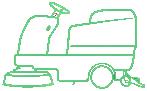
The T16 is a walk-behind scrubber. It's the machine you use when a mop and bucket isn't enough, but a ride-on scrubber would be overkill. It's built for smaller spaces, tight aisles, and daily touch-ups on sealed concrete or tile.
Here's the thing: the T16 is not a heavy-duty industrial scrubber in the way a T500 or T7 is. It's more of a light-to-medium duty machine. If you're cleaning a few thousand square feet of break rooms, hallways, and light production space, a T16 can do the job. If your operation runs multiple shifts and leaves thick grime on a warehouse floor, you want something bigger.
2. Should I buy a T16 or a bigger Tennant industrial floor scrubber?
This is the question I've asked myself and heard from other managers again and again. The honest answer is: it depends on the floor area, debris load, and how much time you're willing to let operators spend cleaning.
The T16's narrow width is a strength in tight spots, but that same width means more passes on an open warehouse floor. When I compared a T16 against a larger ride-on scrubber for our facility, the calculation said the bigger machine would clean in half the time. My gut said start small and see if we actually used it. I was wrong. We used the T16 constantly, but it wasn't enough on the big floor. We ended up renting a larger scrubber for the main areas and keeping the T16 for edges and daily cleanups.
If your space is mostly open, go bigger. If it's a mix of tight areas and open floor, consider the T16 as a second machine, not your main one. That's not a dig at the T16. It's a matchup problem.
3. Is the 5680 floor scrubber actually a scrubber?
Careful with this one. The Tennant 5680 is a rider sweeper, not a floor scrubber. If you're searching for a 5680 floor scrubber, you might be mixing up two different cleaning jobs. I've almost made that mistake.
The 5680 is designed for dry debris: dirt, dust, packaging, metal shavings. It doesn't apply and recover water like a scrubber does. If you need a scrubbing machine, you'd be looking at a walk-behind like the T16 or a ride-on industrial scrubber. If your floor has both dry debris and oily grime, you might need a sweeper for the dry pass and a scrubber for the wet pass.
Before you sign a purchase order, confirm whether the specific model is sweeping or scrubbing. This sounds obvious, but when you're staring at search results, the difference isn't always clear. And ordering the wrong one is expensive. Period.
4. Floor sweeper vs. floor scrubber: which do I actually need?
A sweeper picks up dry debris and dust. A scrubber applies water and cleaning solution, scrubs the floor, then vacuums up the dirty water. If your problem is dirt, gravel, or cardboard scraps, you need a sweeper. If your problem is grease, sticky residue, or floors that need to be dry and safe immediately after cleaning, you need a scrubber.
I only understood this after buying a sweeper when what I actually needed was a scrubber. The machine did exactly what it was built to do. I just asked it to do the wrong thing. It collected dust beautifully but didn't touch the oil stains. That was an expensive lesson. Don't repeat it.
5. How do I find a floor sweeper nearby, or an industrial floor sweeper in Perth?
Start with a search for 'floor sweeper near me' or 'industrial floor sweeper Perth.' But don't just pick the first result. Look for an authorized dealer or service center. I learned this when I bought from a cheaper dealer who was 400 kilometers away. The first part shipment cost more than I saved on the purchase.
If you're in Perth, ask whether the supplier has local technicians, rental units, and spare parts in stock. The nearest dealer might not have the lowest quote. Actually, they usually don't. But when a machine goes down, local support is the difference between a short repair and a week of downtime.
Oh, and consider renting before buying. A good local dealer will often let you run a sweeper or scrubber on your own floor for a day. Trust me, the results will tell you more than any spec sheet.
6. What does 'industrial' actually mean for a Tennant industrial floor scrubber?
Industrial means the machine is built for continuous use in rough environments. It's not just a bigger motor. It's heavier-duty materials, better filtration, and components rated for longer runtimes. A light-commercial machine won't survive a production floor with forklift traffic and metal dust.
Tennant's published spec sheets list scrubber widths, pad pressures, and runtimes. That's a good starting point. But the number I care about is the one they don't publish: cost per cleaning hour. That includes energy, water, chemicals, batteries, maintenance, and downtime.
If you're not sure whether you need a Tennant industrial floor scrubber, ask the dealer about duty cycle. How many hours a day can this run, day after day? If they can't answer, that's a red flag.
7. How should I budget for a Tennant T16 or industrial floor scrubber?
Don't budget on list price. Budget on total cost of ownership. Here's what I put in my spreadsheet for every cleaning equipment purchase:
- Purchase price or lease payment
- Battery and charger costs, if electric
- Maintenance, filters, pads, brushes, and replacement parts
- Downtime risk — how long will you wait if something breaks?
- Operator training and cleaning productivity
I built this spreadsheet after getting burned twice. Once on a cheaper machine with no local parts network. Once on a quote that looked like a steal right up until I added in the extra hour of labor per cleaning cycle. The cheapest quote rarely wins once you run the full math.
Here's a real comparison: a used sweeper priced $3,000 less than a comparable Tennant model. The upside was obvious. The risk was that I couldn't find a service technician within a 150-kilometer radius. I kept asking myself: is $3,000 worth potentially losing a full day of production? No. We bought the Tennant. A year later, the cheaper machine's replacement battery alone would have wiped out the savings.
If you're searching for a Tennant T16 floor scrubber, a Tennant industrial floor scrubber, or a floor sweeper nearby, make total cost your first filter, not the last. The right machine is the one that keeps your floors clean and your maintenance budget honest.

Elise Marceau
Elise Marceau is an LED display and digital-signage systems analyst covering LED video walls, modular screens, transparent LED, control processors, and indoor or outdoor signage. She applies IEC 62368-1 safety principles while comparing pixel pitch, luminance, contrast, refresh rate, colour uniformity, viewing angle, ingress protection, power density, module serviceability, and signal redundancy. Her specification guides help integrators, venue operators, retailers, and procurement teams align viewing distance, ambient light, content format, installation access, electrical load, and lifecycle support.